
Wanna Kicks is an augmented reality (AR) try-on app that allows users to virtually try on and purchase various styles of sneakers from popular brands.
The app uses AR technology to superimpose a 3D model of the chosen sneaker onto the user's foot, giving them a realistic idea of how the sneaker would look and fit in real life.
The app was released in April 2021, and is available for both iOS and Android devices.

To better understand the app, I tried it out myself. This is the current user flow, there are 3 main menus in the app: discover, try on and catalog. Discover takes users to the product page with the newest releases; Try on is the AR view page; and Catalog is a search page with basic filters.
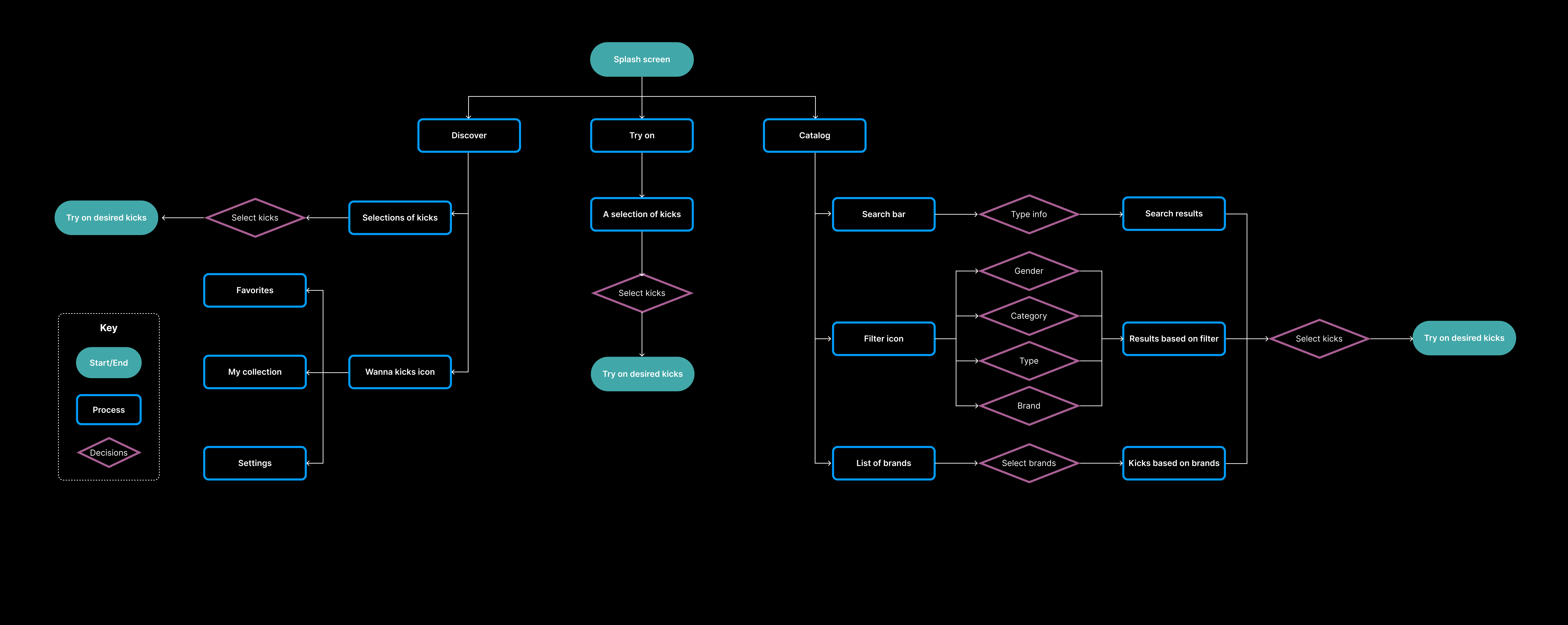
Here are some user reviews that resonated with my own try-on experience:
- “ I’d love to see more of the shoes I like, instead of the ones that’s already there. ”
- “ I think of actually buying these items so I ask you to please add price range to choose from ”
- “ You can change into any outfit and try them on to see what works and what doesn’t. ”

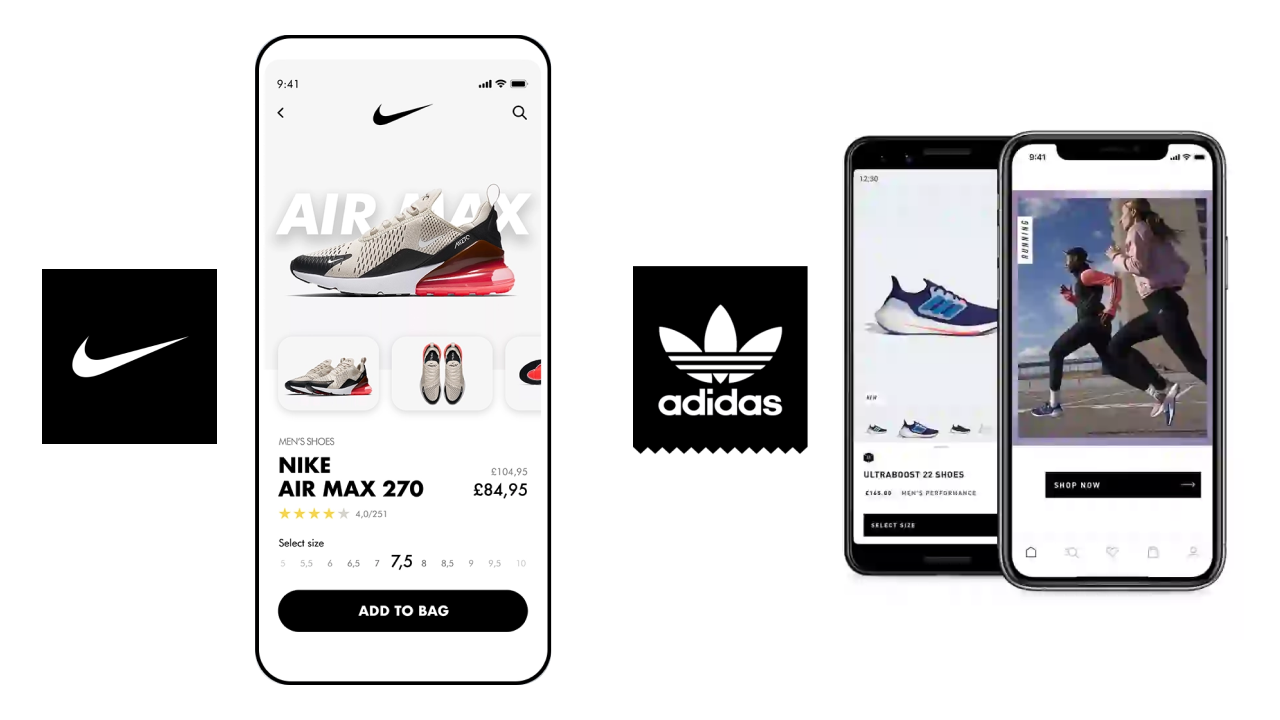
I did competitive analysis on Nike and Adidas mobile apps, because they are also sneaker brands that allow their users set their preferences while shopping online.
What I learned:
* When the feed is tailored to users' preferences, it feels personal;
* If the items users see are within their budget, it can encourage them to try and even purchase;
* Users like to try shoes that match their outfits and can fit in their wardrobe.
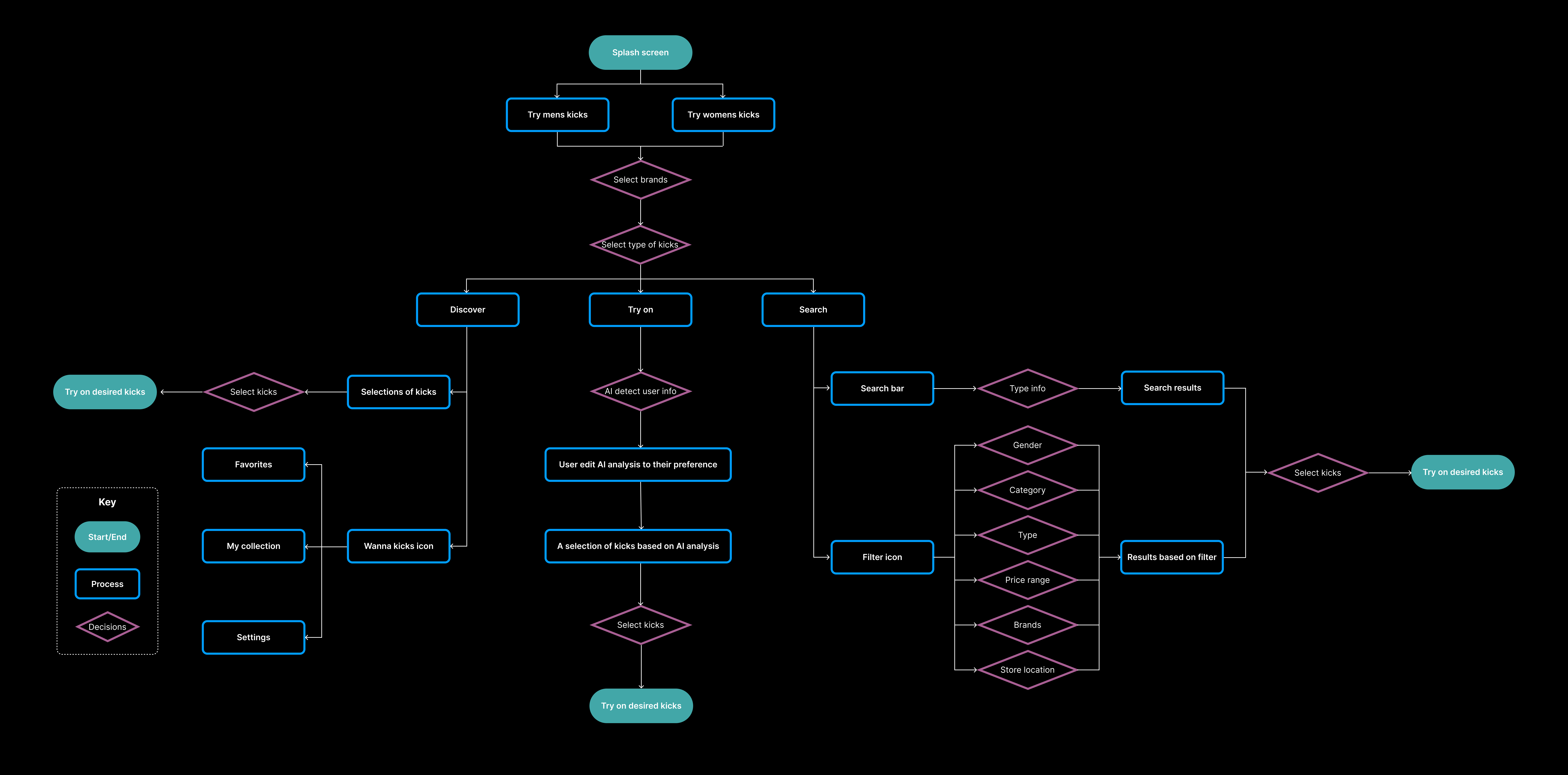
According to the reviews, many users try sneakers on to match their outfits and see if they fit their styles. A subversive idea I came up with was: how about we ask AI to give us recommendations based on our outfits? Here are the sketches I did to quickly illustrate my thoughts:

I created a proposed user flow that incorporates a preference setting screen during the onboarding process, allowing users to personalize their feed. Additionally, I've introduced a new filter system to facilitate the discovery of specific styles that match their interests. This approach not only helps establish a stronger bond between users and the app but also promotes a more meaningful level of engagement.
- Finding: There is no preference setting to see personalized content.
The current app offers a fixed set of shoes for all users. This represents a missed opportunity to deliver a more tailored and customized experience.
My suggestion is to include a preference setting into the onboarding process, enabling users to establish their try-on preferences and customize the entire app experience to their liking.

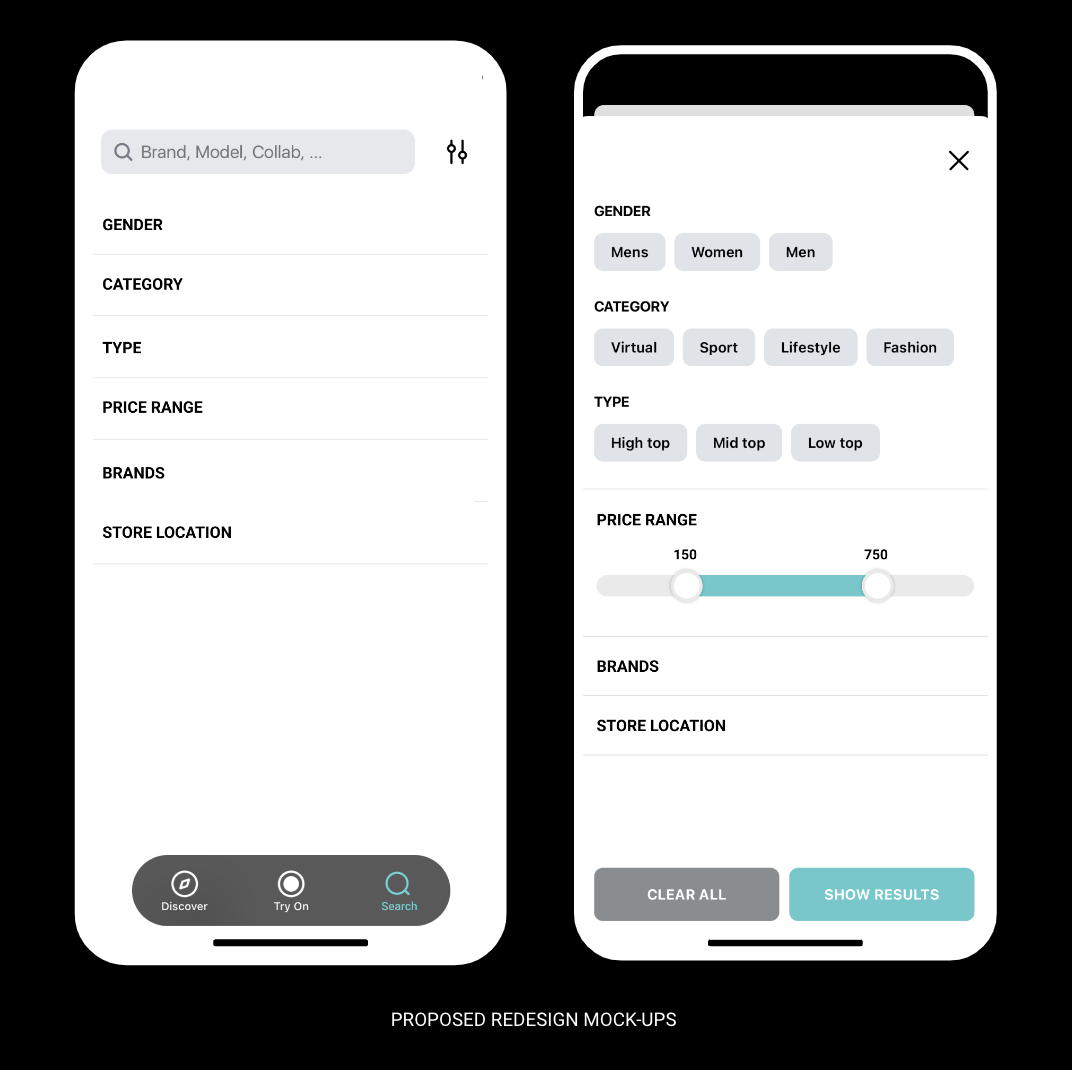
- Finding: There is no price range to allow users to try on kicks within their budget
The absence of a price range feature limits users from trying on kicks within their budget, despite many users utilizing the app to test how they look before committing to a purchase.
My recommendation is to incorporate a price range filter, which will allow users to set their desired price and make informed decisions. This feature can also encourage users to purchase the actual shoes after trying them on.
- Finding: Users utilize the app to discover sneakers that complement their outfits
The current app allows users to explore a variety of sneakers and experiment with different outfits, assessing what works and what doesn't. Nonetheless, I have an idea: why not leverage the app's AI algorithm to analyze the user's attire and suggest suitable options based on their personal style?
My recommendation is to Enable AI to identify users' personal style and provide customized footwear suggestions based on this information. Hypothetically, AI could recognize the user's unique characteristics, such as the fabrics and colors present in their outfit, and even their current emotional state.With this feature, users can receive tailored recommendations that complement their own fashion sense, enabling them to incorporate the latest trends into their footwear choices."

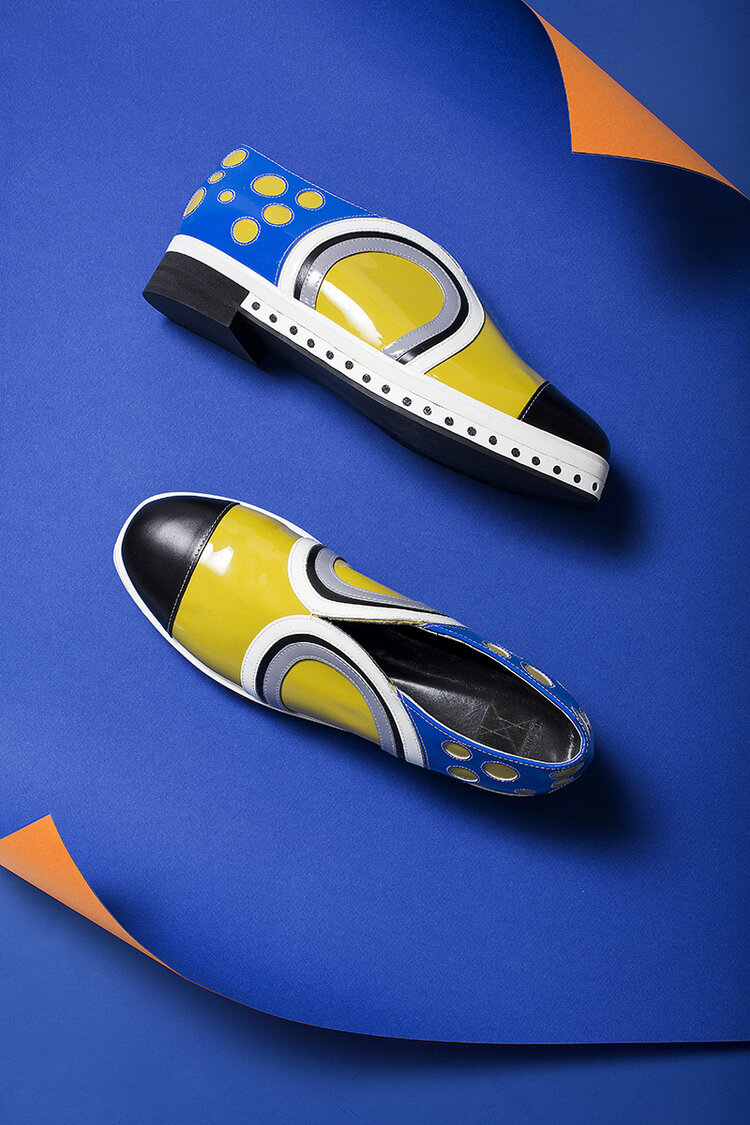
I used the sneakers I designed during my senior year at Parsons as the 3D model for the AR lens. As the winner of the Shoe Polytechnique shoe design competition, I had the privilege of having the shoes I designed manufactured in Italy, and I received samples as a reward. I used Polycam to capture the sneaker samples, and then imported the resulting scans into Blender to enhance the model and prepare it for the AR lens.
.gif)
I chose Snapchat Lens Studios to create the AR lens because it provided foot tracking features and tools to bring my project to life.
Further more, publishing my AR lens on Snapchat allowed other users to access and use my filter. This not only expanded the reach of my project but also provided an opportunity for others to engage with and enjoy my work.
By sharing my work with a large and diverse audience, I was able to showcase my skills and establish myself as a creative and innovative designer in the field of fashion and technology.

This project holds a special place in my heart as it allowed me to merge my passion for fashion and technology and express my design vision. When I initially ventured into digital design work, people questioned my transition from fashion to technology and how I would integrate my fashion background into my current work. However, this project is the perfect example of how I leverage the best of both worlds to develop innovative and aesthetically pleasing products.
Moreover, as Artificial Intelligence continues to advance, instead of fearing it, I prefer to work with it and leverage its capabilities to create even more exciting products. I believe that AI has immense potential in the fashion industry and can assist in enhancing the customer experience, personalizing recommendations, and improving production efficiency.